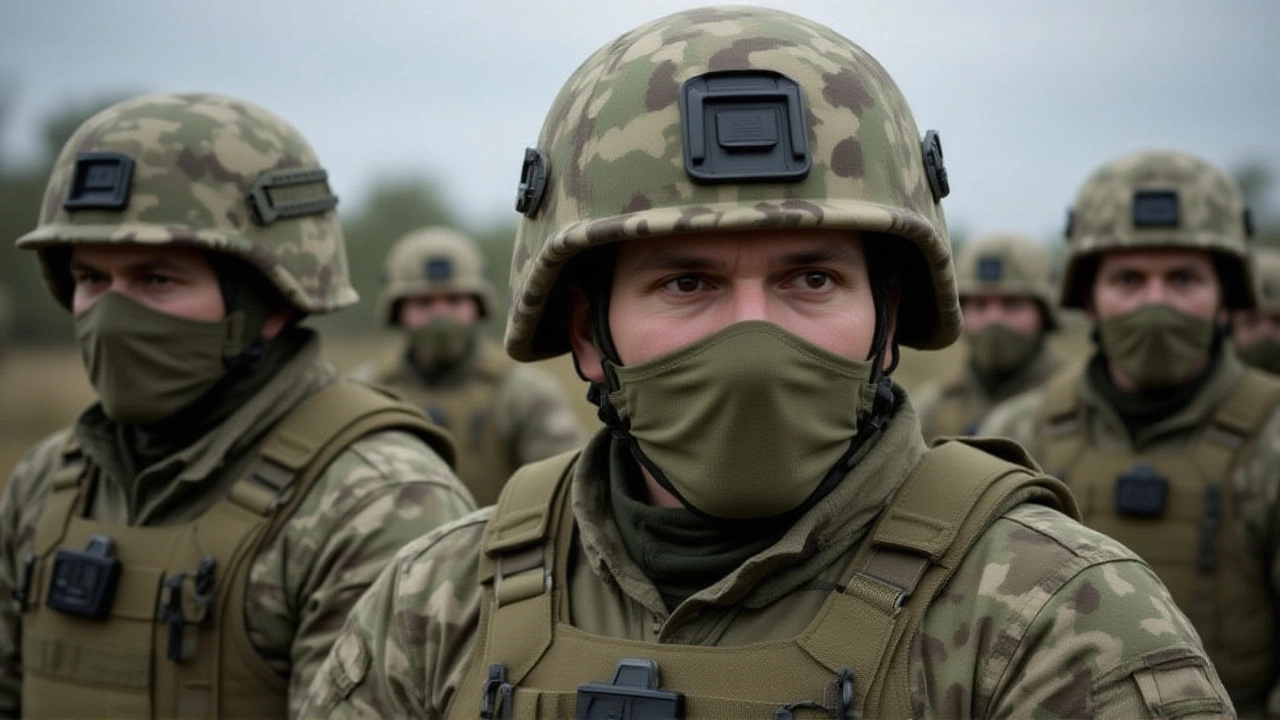
On November 20, 2025, the Trump administration delivered a startling 28-point peace proposal to Ukrainian President Volodymyr Zelensky—a plan that, if accepted, would require Ukraine to surrender control of key territories it still holds and formally recognize Russian annexation of Crimea, Luhansk, and Donetsk. The draft, presented during a tense 90-minute meeting in Kyiv, was the culmination of secret negotiations between U.S. envoy Steven M. Witkoff and Kirill Dmitriev, CEO of the Russian Direct Investment Fund (RDIF), a Kremlin-linked entity closely tied to Vladimir V. Putin. The timing was no accident: it came just hours after Zelensky returned from a diplomatic tour abroad, signaling a deliberate push to pressure Kyiv before it could rally international support.
The Draft’s Stark Demands
The proposal, obtained by Alltimepost.com and The Star, is a chilling blueprint for a peace that favors Moscow. Ukraine would be forced to withdraw its forces from the remaining parts of Donetsk Oblast it controls, turning the area into a "neutral demilitarized buffer zone"—legally recognized as Russian territory. Crimea, Luhansk, and Donetsk would be formally acknowledged as "de facto Russian," including by the United States. Even more striking, the plan calls for freezing the front lines in Kherson and Zaporizhzhia regions, while Russia would only give up minor occupied areas elsewhere. It’s not a compromise—it’s a recognition of conquest.
Under the plan, Ukraine’s armed forces would be capped at 600,000 personnel—down from over 800,000 currently. Snap elections within 100 days are demanded, raising fears of Russian interference. A "comprehensive non-aggression agreement" between Russia, Ukraine, and Europe is proposed, but with no enforcement mechanism. And here’s the kicker: the U.S. would scale back military aid to Kyiv, according to a Financial Times source who spoke on condition of anonymity. One insider bluntly told reporters: "Accepting this framework would amount to Ukraine giving up its sovereignty."
Washington’s Quiet Diplomacy
The Trump administration didn’t just drop this on Zelensky’s desk. Since at least November 18, 2025, U.S. officials have been quietly briefing European capitals—Germany, France, Poland—on the plan, according to Newsmax. The goal? To normalize the idea that Russia’s battlefield gains are now permanent facts on the ground. Sean Driscoll, a civilian official in the U.S. delegation, and three generals sat across from Zelensky at 20:57 CET on November 20, presenting the draft as a "pathway to peace." But the language was telling: "We’re not asking you to surrender. We’re asking you to survive."
U.S. Secretary of State Marco Antonio Rubio echoed this tone on X (formerly Twitter), saying, "A durable peace will require both sides to agree to difficult but necessary concessions." But the word "both" is the problem. Ukraine has been fighting for three years. Russia invaded. The asymmetry isn’t just military—it’s moral.
What Ukraine Says—And Doesn’t Say
Zelensky’s office issued a carefully worded statement: "Ukraine is ready to work with the United States to develop a plan to end the war." But they didn’t endorse it. They didn’t even call it "fair." And Zelensky himself made it clear he wants to speak directly with President Trump, likely in the coming days. That’s not negotiation—it’s delay. And delay, in wartime, is often a form of surrender.
Meanwhile, leaked documents suggest the plan may also require Ukraine to adopt Russian as an official state language—a move that would fracture national identity and empower pro-Moscow factions. No Ukrainian government has ever proposed that. No Ukrainian parliament would pass it. And yet, the U.S. is presenting it as a viable option.
Why This Matters Now
This isn’t just about Ukraine. It’s about the future of international law. Since Russia’s invasion on February 24, 2022, over 100,000 square kilometers—nearly one-fifth of Ukraine’s territory—have been occupied. The world has condemned it. Sanctions have been imposed. Weapons have flowed. But now, the United States—the country that once led the free world—is quietly endorsing territorial conquest. That’s a precedent no democracy can ignore.
The Trump administration is racing toward a summit with Putin, possibly in Budapest, Hungary. They want a signed deal before then. But peace built on coercion isn’t peace—it’s capitulation. And history won’t remember this as diplomacy. It’ll remember it as the moment the West stopped defending its own principles.

What Comes Next?
Ukraine’s military is exhausted but not broken. Western allies are divided. Some European leaders, like Poland’s Donald Tusk, have already signaled alarm. Others, like Hungary’s Viktor Orbán, may quietly welcome the plan. Meanwhile, Ukrainian civilians in Donetsk and Zaporizhzhia are bracing for another winter under occupation—or worse, displacement.
The draft plan is not final. But it’s real. And it’s being pushed by the most powerful nation on Earth. That’s the real crisis.
Frequently Asked Questions
What does the U.S. gain from this plan?
The Trump administration hopes to end U.S. involvement in Ukraine quickly, reduce defense spending, and reset relations with Russia ahead of a potential Trump-Putin summit. By framing the proposal as "pragmatic," Washington aims to shift blame for territorial losses onto Kyiv while avoiding direct responsibility. But it risks alienating NATO allies and undermining global norms against land grabs.
How does this affect Ukrainian civilians?
Over 3 million Ukrainians still live in areas claimed by Russia under this plan. Forced displacement, language suppression, and loss of property rights are likely outcomes. In Donetsk alone, an estimated 400,000 people could be stripped of Ukrainian citizenship overnight. Many fear being labeled "collaborators" if they resist Russian integration, while others may face conscription into Russian military units.
Why is Kirill Dmitriev involved in these talks?
Kirill Dmitriev is not just a financier—he’s Putin’s personal emissary for high-stakes geopolitical deals. As head of the Russian Direct Investment Fund, he’s managed billions in state-backed investments tied to energy, defense, and intelligence operations. His involvement signals that this isn’t a diplomatic negotiation—it’s a Kremlin-approved blueprint, brokered through a trusted proxy.
Has the U.S. ever recognized Russian annexation before?
No. The U.S. has consistently rejected Russia’s 2014 annexation of Crimea and its 2022 claims over Donetsk and Luhansk. This draft marks the first time a U.S. administration has signaled willingness to recognize those claims as "de facto." That’s a seismic shift in foreign policy—one that would violate the UN Charter and the Helsinki Accords, which guarantee territorial integrity.
What’s the timeline for this plan?
The Trump administration aims to finalize the plan before its next scheduled meeting with Putin, possibly in Budapest. Zelensky has 100 days to hold elections under the proposal, and a ceasefire would need to be implemented within 30 days of agreement. But without Ukrainian consent, the plan has no legal force—and no chance of lasting peace.
What are the chances Ukraine will accept this?
Extremely low. Ukraine’s parliament, public opinion, and military leadership have all rejected any deal that cedes territory. Zelensky’s government has repeatedly stated that sovereignty is non-negotiable. Even if the U.S. pressures Kyiv, domestic resistance would likely trigger political collapse. Accepting this plan would mean ending Ukraine as an independent state in all but name.